
Do Dogs Grieve? How to Help Your Dog After Pet Loss
When a pet dies, their absence is everywhere. The morning snuggles, the empty bed, the leash right where you left it after their last walk, and the bowls that sit there empty.
Grieving the loss of a pet is one of the most challenging losses we face, in part due to the nature of the relationship: unconditional, endless love.
And then there’s your other pet.
When we talk about pet loss, we usually focus on the humans who are grieving. But the other animals in the household have experienced a loss, too. Especially if the two animals had a close relationship.
Maybe your dog keeps checking the room where your pet used to sleep. Maybe they’re following you everywhere or have become increasingly mopey or lethargic. A lot of these signs are completely normal for an animal grieving another animal.
So how do you help your pets grieve while you as well are grieving? Let’s get into it.
Key Takeaways, TL;DR
Dogs can show grief-like behavioral changes after another pet dies, including eating less, playing less, sleeping more, becoming more fearful, vocalizing, or seeking more attention.
The closeness of the relationship may matter more than how long the animals lived together. Research has found stronger behavioral changes among dogs who had friendly or close relationships with the dog who died.
Your pet is adjusting to more than an empty spot in the house. Their routines, social relationships, and interactions with you may all change after a death.
Keeping life predictable can help. Regular meals, walks, sleep schedules, play, and familiar routines can provide some stability while the household adjusts.
You don't need to immediately get another pet. A new animal isn't a replacement for the relationship that was lost and may actually create additional stress.
Don't automatically assume every change is grief. Appetite loss, lethargy, bathroom changes, or significant behavioral changes can also indicate a medical problem and should be discussed with your veterinarian.
Do Dogs Grieve When Another Pet Dies?
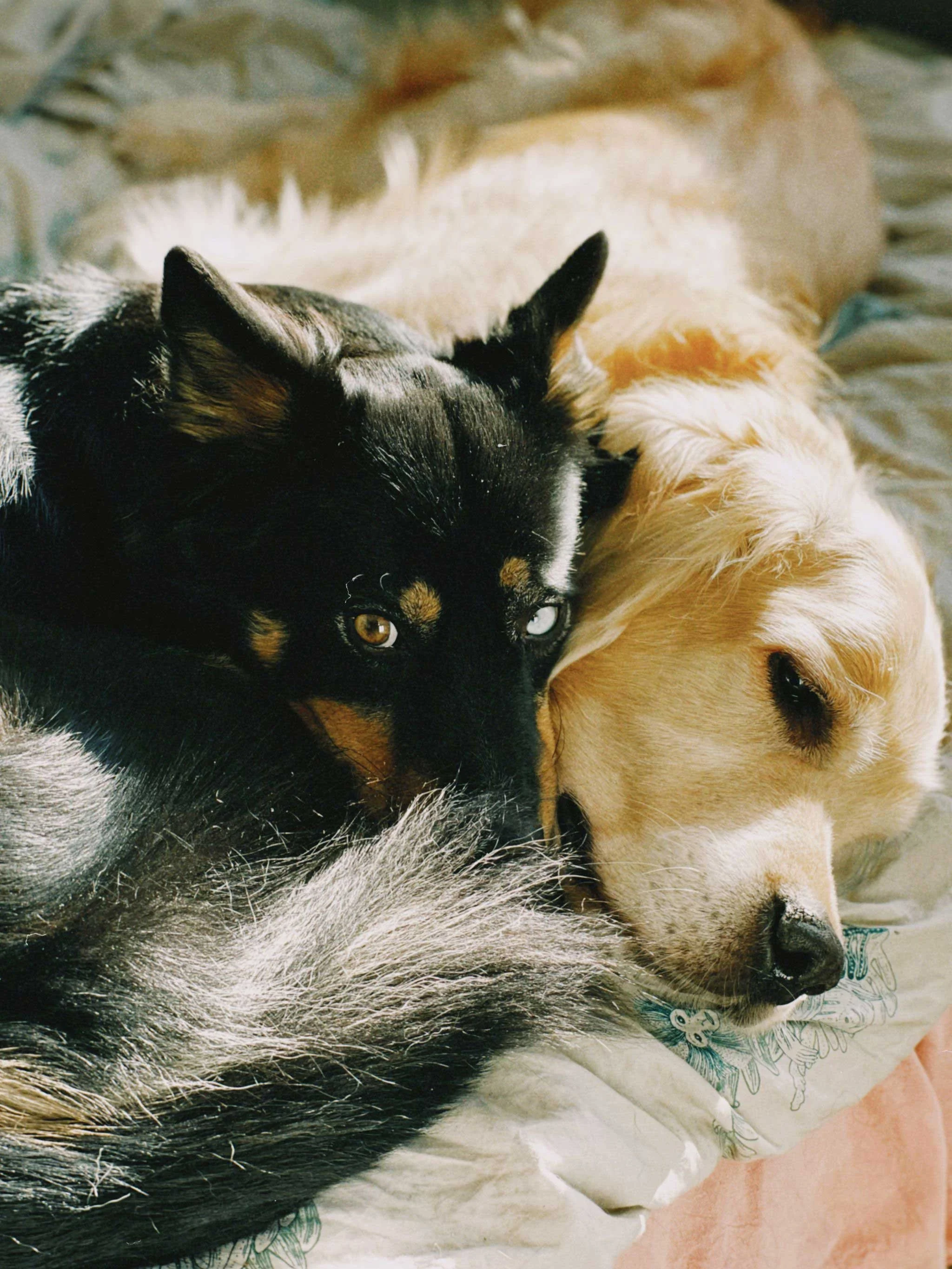
Research suggests that dogs can show significant behavioral changes after another dog in the household dies, particularly when the two animals had a close relationship.
We can’t ask a dog what grief feels like or know whether their internal experience is the same as ours.
What we do know is that dogs form social bonds, and researchers have documented behavioral changes in surviving dogs after another dog in their household dies.
A 2022 study published in Scientific Reports surveyed 426 people who had owned at least two dogs and had experienced the death of one while the other was still living. Owners commonly reported changes in the surviving dog's behavior after the loss.
Among the surviving dogs:
67% sought more attention
57% played less
46% had reduced activity
35% slept more
35% became more fearful
32% ate less
30% vocalized more
Interestingly, researchers found that the quality of the dogs' relationship was associated with these changes, not necessarily the length of time they lived together.
Dogs who had a friendly or parental relationship were more likely to show certain behavioral changes after the death. Simply having lived together for a long time didn't explain the response in the same way.
In other words, the relationship seemed to matter most when it came to the level of grief.
The researchers were careful not to claim that this definitively proves dogs experience grief as humans understand it. Some of what we see could involve separation distress, disruption of routines, changes in the household, or a combination of all of these things.
But from a practical standpoint, we don't need to know exactly what label a dog would put on the experience to recognize that their world has changed and it’s impacting them.
What Does Grief Look Like in Dogs?
Dog grief doesn't necessarily look like a tiny furry version of human grief.
You probably won't find your dog lying dramatically on the couch listening to sad music and scrolling through old photos. Although, frankly, some dogs have the dramatic range for it.
Instead, you're looking for changes from your dog's normal behavior, particularly changes that begin after their companion dies, that are not typical of them.
Searching for the Pet Who Died
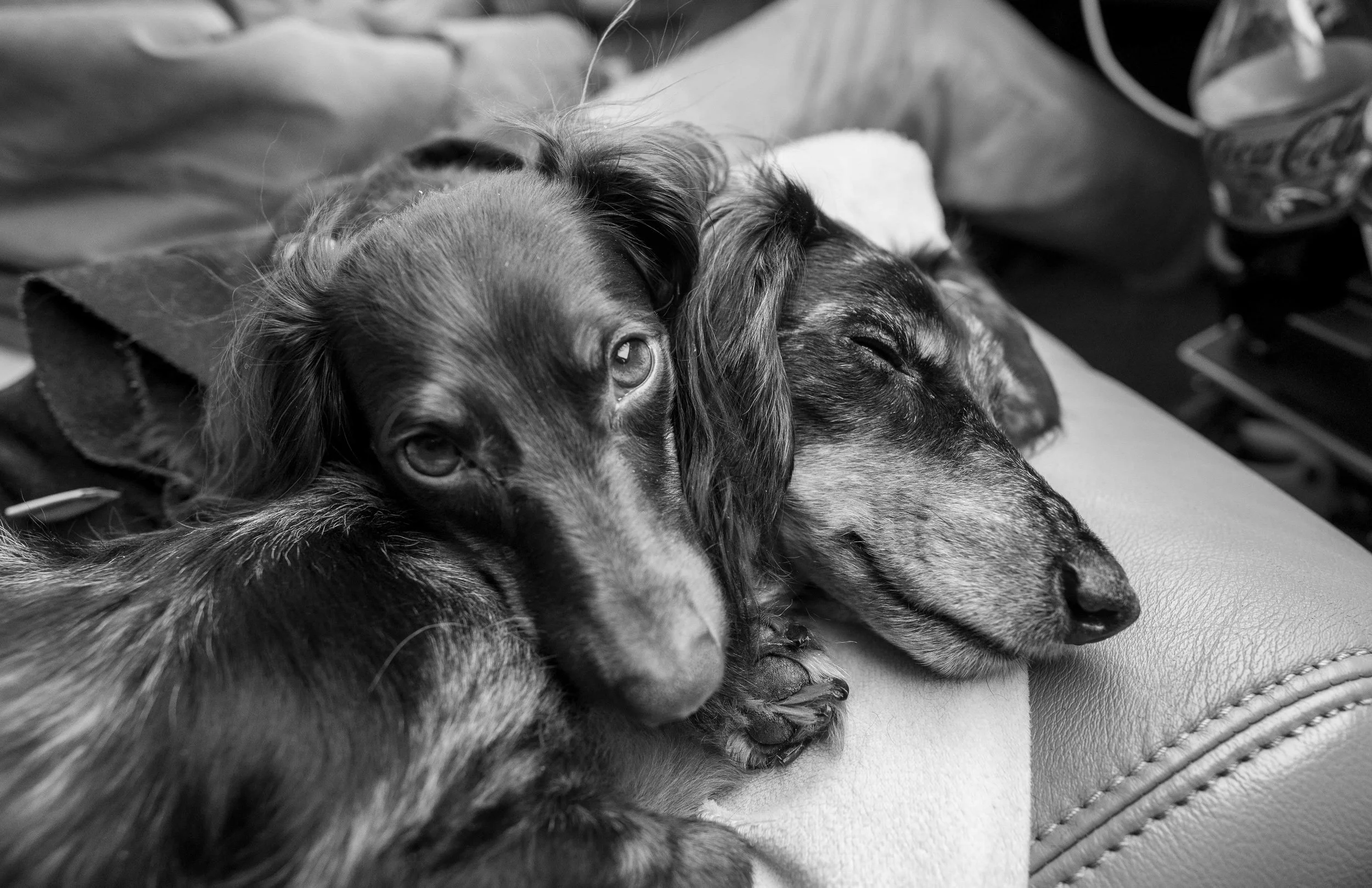
One of the harder things to watch can be a surviving pet seemingly looking for the animal who died.
Your dog might:
Check their companion's usual sleeping spots
Wait near a door
Sniff around their bed or belongings
Wander from room to room
Return repeatedly to places where they spent time together
We can't know exactly what they're thinking when they do this. They may be searching for their companion, responding to familiar smells, or noticing that an expected part of their environment is missing.
Whatever is happening internally, you don't necessarily need to interrupt it.
Letting your dog investigate their changed environment can be part of adjusting to what is different now.
Changes in Eating
Some dogs eat less after another pet dies. Eating can also be part of a shared routine.
Maybe the dogs always ate together. Maybe one dog waited impatiently while the other took approximately seventeen business days to finish a bowl of kibble. Maybe the excitement of one dog helped cue the other that dinner was happening.
When one animal disappears, the entire ritual changes.
A mild, temporary appetite change may occur during a period of adjustment. But significant appetite loss should always be taken seriously, particularly in older pets or animals with existing medical concerns.
If your dog stops eating, is eating substantially less, or has other physical symptoms, contact your veterinarian rather than assuming it's grief.
Sleeping More or Having Trouble Settling
Some grieving dogs sleep more than usual, while others may become restless.
You might notice pacing, difficulty settling at night, sleeping in unusual places, or choosing the deceased pet's bed.
Again, the important thing isn't whether a behavior appears on a universal "dog grief checklist." It's whether something has noticeably changed for your dog.
Becoming Clingier
Sometimes pet grief can look like a pet asking for more physical contact, struggle more when you leave, seek reassurance more frequently, or become your permanent shadow.
This makes sense in the context of a disrupted social group. One of the beings who was reliably present is suddenly gone.
Seeking closeness may be one way your dog responds to that uncertainty.
Withdrawing or Playing Less
Some dogs become quieter, play less, interact less with family members, or seem less interested in activities they normally enjoy.
That's one reason it's helpful not to have a rigid idea of what pet grief is "supposed" to look like.
One dog may practically crawl inside your sweatshirt after losing a companion. Another may want to sleep by themselves.
Both have experienced a major change and a processing it the best way they know how.
Your Dog Isn't Only Responding to the Missing Pet
When a pet dies, the entire household changes.
Think about how much of your daily life can revolve around an animal, particularly toward the end of their life.
There may have been medication schedules, special meals, vet appointments, mobility assistance, interrupted sleep, different walking routines, or separate spaces within the house. Then suddenly, all of it stops.
You are grieving.
You may be sleeping differently. Crying. Spending more time at home or less time at home. Forgetting your usual evening walk. Moving beds and bowls. Talking differently. Moving differently.
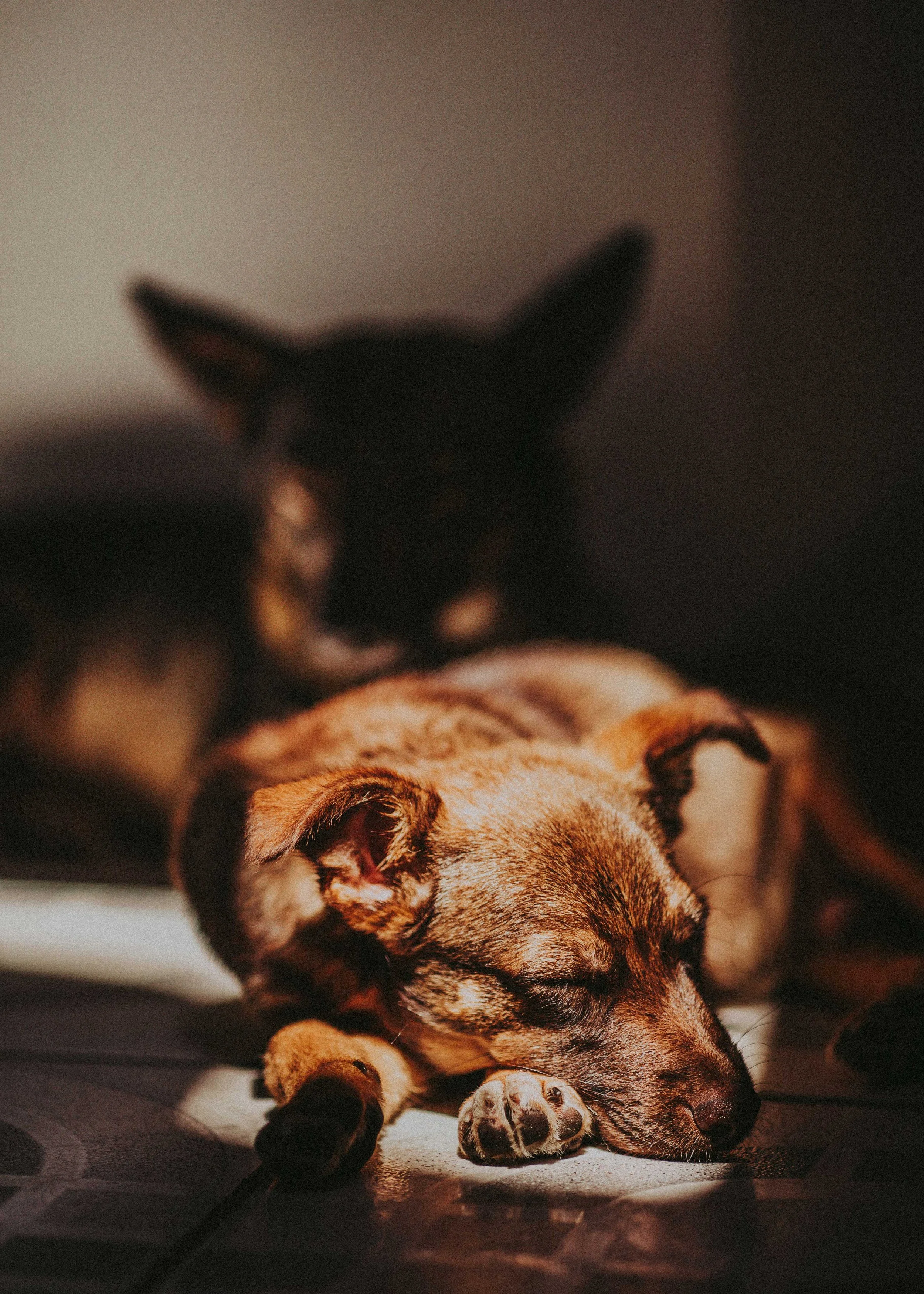
Your surviving pet is experiencing the absence of their companion and all of these environmental changes at once.
The 2022 study on canine grief also found associations between some owner grief responses and changes in surviving dogs. That doesn't mean your sadness is harming your dog or that you need to pretend everything is fine. It simply reminds us that animals live within relationships and systems, too.
Your dog isn't grieving in a vacuum and neither are you.
How to Help a Grieving Dog After Another Pet Dies
Keeping their world as predictable as you can, talking to them about the loss, and being available for extra reassurance or cuddles goes a long way in helping your pet grieve. And, you know your pet best! Do what feels good for them and trust your instinct.
1. Talk to them about it
Animal companions are really good at reading human body language and emotions. They can tell when something is up or something has shifted. It can be helpful for you, and for them, to sit down and talk to them about what’s happening.
It may feel silly at first, it can be helpful to process out loud what’s happened and intentionally connect with your remaining pet(s) about the loss.
Explain it to them as you would a young child. Something like…
I’m sorry mommy has been so sad lately. It’s because she’s really missing Honey. Mommy is sad Honey is never coming back, and it’s okay to feel sad. You might be feeling sad or confused too and that’s okay. Don’t worry, Mommy is here for you and we can get through this together. I love you very much and appreciate your love and presence during this hard time. You’re a very good pup and I love you to the moon and back.
2. Keep Their Routine as Consistent as Possible
After a major loss, boring can actually be helpful. Keeping a regular routine can feel soothing and stabilizing after such a big change.
Try to maintain familiar:
Mealtimes
Walks
Bedtime routines
Bathroom schedules
Playtime
Training activities
Time together
This doesn't mean you have to maintain a military-grade schedule while you're grieving yourself.
If dinner happens at 6:30 instead of 6:00 because you're exhausted and living primarily on cereal right now, your pet will survive the scandal.
The goal is simply to preserve some familiar rhythms as predictability can help reduce the number of changes your pet has to process at once.
3. Let Them Seek You Out
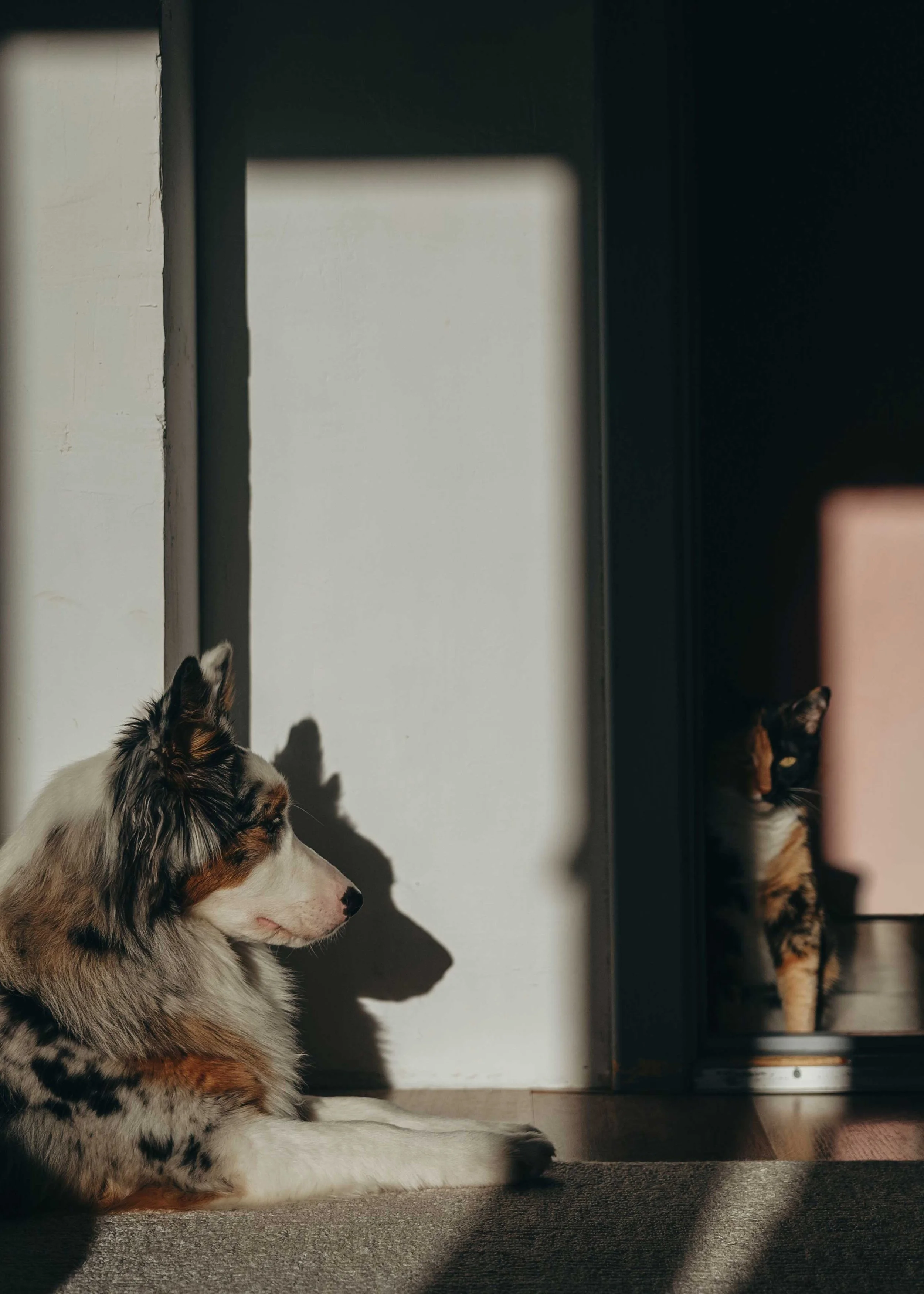
If your pet wants more closeness and cuddles, it’s okay to give it. Spending time sitting together, laying together, having them sleep nearby and offering affection.
You don't need to worry that you're somehow "reinforcing grief" by comforting your dog.
And at the same time, follow their cues. If they seem to want more space, let them have that, too.
Support doesn't always mean doing more. Sometimes it means making connection available without forcing it.
4. Continue Activities They Enjoy
Grief can shrink the world—for both humans and animals. Maintaining familiar enjoyable activities can help keep some normalcy in your pet's day.
That might mean a sniffy walk around the neighborhood, sitting outside together, a food puzzle, playing tug, going for a car ride, doing a few easy training exercises, or visiting a familiar trail.
This isn't about distracting them so they "get over it” but about keeping access to things that make their world interesting and familiar.
5. Add Gentle Enrichment
If your dog's activity has decreased, gentle enrichment can provide stimulation without demanding too much from them.
You could try sniffing games, scatter feeding, food puzzles, licking activities, short training sessions, or allowing extra time to investigate smells on walks.
Keep your individual dog's preferences in mind - the enrichment that one dog finds delightful is another dog's deeply offensive workplace assignment.
6. Don't Rush to Get Another Pet
After losing one pet, the silence in the house can feel unbearable.
It's understandable to wonder whether your surviving dog "needs a friend."
But immediately bringing home another animal isn't necessarily the best solution.
A new dog or cat is a completely new relationship—not a replacement for the one that died.
Introductions, changed routines, sharing resources, and figuring out a new social dynamic can also create stress.
Give yourself and your surviving pets some time to adjust before deciding what comes next.
When you eventually feel ready for another animal, that decision can be about welcoming that individual animal into your family rather than trying to soften the pain of loosing a loved one.
Should My Dog See the Body of a Pet Who Died?
This is a question people often have, especially when euthanasia is planned.
You may have heard that surviving pets need to see or smell the body so they understand what happened.
The evidence isn't that clear.
In the 2022 Scientific Reports study, whether a surviving dog had seen the deceased dog's body was not associated with the duration of the behavioral changes owners observed afterward.
That doesn't mean allowing another pet to investigate the body is inherently wrong. Some families choose to do this when circumstances make it possible, and a pet may sniff or investigate their companion.
But if your pet wasn't present when their companion died, you don't need to carry additional guilt that you somehow prevented them from getting "closure."
We simply don't have good evidence that seeing the body is required for a dog to process the loss.
Can My Dog Feel That You're Grieving?
Dogs are remarkably tuned in to their environments and to the humans they live with. So yes, your behavior and emotional state may affect them, but that’s not inherently a bad thing.
Grieving pet owners already tend to have enough guilt without adding I cried in front of my dog and emotionally damaged him to the list.
You do not need to hide your grief from your pet.
You are allowed to cry and miss them. You can sit on the floor holding their collar while your other dog lies beside you.
Your surviving pet may notice that something is different. They may seek you out more. They may respond to changes in your routine or behavior. But that doesn’t mean you need to perform happiness for them in order to help them feel better or process their own grief.
Instead, focus on keeping their basic needs and routines reasonably consistent while allowing both of you to adjust.
Sometimes - often - grief really is something we do together.
How Long Do Dogs Grieve After Another Dog Dies?
There isn't a universal timeline for when a pet should “get over” or “move on” from the loss of another pet.
In the 2022 study, when behavioral changes occurred, some lasted less than two months, some lasted two to six months, and about a quarter of owners reported changes lasting longer than six months.
But those numbers shouldn't become a countdown clock.
Your dog isn't late to grief graduation if they're still acting differently on day 61.
Instead, notice the overall pattern. Are they eating? Sleeping? Engaging with you? Showing interest in things they normally enjoy? Are things gradually settling, or are they getting worse?
And remember that age and health matter.
If your 13-year-old dog suddenly becomes lethargic after their companion dies, grief may seem like the obvious explanation—but 13-year-old dogs are also pretty talented at developing unrelated medical problems at deeply inconvenient times.
Changes that concern you deserve a veterinary evaluation.
When Should I Call My Veterinarian?
Grief can affect behavior, but grief shouldn't become the automatic explanation for every change after a pet dies.
Contact your veterinarian if your pet:
Stops eating or drinking
Experiences significant or persistent appetite changes
Has vomiting, diarrhea, or new bathroom problems
Seems unusually lethargic
Appears to be in pain
Develops significant anxiety or distress
Has major behavioral changes that aren't improving
Shows aggression or serious conflict with other animals in the household
Simply seems physically "off"
You know your pet's baseline better than anyone.
If something feels medically concerning, it's worth checking.
A veterinarian can help rule out physical causes and, when needed, connect you with a qualified veterinary behavior professional.
What If You're Grieving, Too?
Supporting your surviving pets while you're grieving can be difficult.
You may be trying to keep their routines normal while your own routine feels completely wrecked. Their searching behavior may break your heart. Seeing two bowls when there should only be one may hit you all over again.
And sometimes your surviving pet becomes one of the only other beings who seems to understand that someone is missing.
Pet loss can be profound because our relationships with animals are woven into ordinary life. They aren't someone we talked to twice a month. They were there when we woke up, when we came home, while we cooked dinner, while we watched TV, when we couldn't sleep.
When they die, we're grieving the animal and thousands of tiny moments built around them.
Your other pets may be adjusting to those missing moments, too. And you don't have to handle your grief perfectly in order to support them.
FAQs About Pets Grieving Other Pets
Do dogs know when another dog dies?
We don't know exactly how dogs understand death or whether they understand its permanence. What we do know is that dogs notice when an animal they were bonded with is no longer present and may show significant behavioral changes afterward.
Do dogs grieve other dogs?
Research suggests that dogs can show grief-like behavioral changes after another dog in their household dies. These may include playing less, eating less, sleeping more, becoming more fearful, seeking additional attention, or vocalizing more.
Can a dog grieve a cat?
Dogs can form close social relationships with animals of other species, including cats. While much of the available research specifically examines dogs losing other dogs, it's reasonable to pay attention to behavioral changes after the loss of any animal companion they were closely bonded with.
How long does dog grief last?
There is no set timeline. In one study, behavioral changes ranged from less than two months to more than six months. What matters more than a specific timeline is whether your dog's overall functioning and behavior are gradually stabilizing.
Should I let my dog see my other dog after they die?
You can allow a surviving pet to investigate the body when circumstances make that appropriate, but current research does not definitively show that seeing the body is necessary for "closure." One study found no relationship between seeing the deceased dog and the duration of subsequent behavioral changes.
Should I get another dog to help my grieving dog?
Not necessarily. A new animal introduces another major change and cannot replace the specific relationship your dog lost. It's usually worth allowing your household time to adjust before deciding whether another pet is right for your family.
Is my dog grieving or sick?
Some grief-related behaviors—such as eating less, sleeping more, decreased activity, or withdrawal—can also be symptoms of illness. If the change is significant, persistent, accompanied by physical symptoms, or simply concerns you, talk with your veterinarian rather than assuming grief is the cause.
Grief Changes the Whole Family
When a pet dies, we tend to talk about the human family members left behind.
But families aren't always made up entirely of humans.
We can't know exactly how our pets understand death or whether their experience of grief resembles ours. We don't need to anthropomorphize them to take their behavioral changes seriously.
We can simply recognize that relationships matter to animals, routines matter, and losing an important member of the household can change their world.
Keep things predictable where you can, offer connection without forcing it, watch for changes that need veterinary attention, and give them time.
And while you're taking care of the pets who are still here, remember that you experienced the loss, too.
If you're struggling after the death of a pet, pet loss therapy can give you somewhere to talk about the relationship, the death itself, guilt, difficult end-of-life decisions, and the strange process of learning how to live in a home that suddenly feels different.
You don't have to minimize the loss just because the family member you lost had four legs.
Further Reading
Uccheddu, S., et al. (2022). Domestic dogs (Canis familiaris) grieve over the loss of a conspecific. Scientific Reports, 12, 1920.
VCA Animal Hospitals. Helping Your Grieving Pet.
VCA Animal Hospitals. Do Dogs Mourn?