
Losing a pet can be one of the most destabilizing losses in life. Our pets have been by our sides through it all. Through the promotions, the heartbreaks, the new jobs, and the cross-country moves.
And through it all, they’ve offered unconditional love, consistent affection, companionship, friendship, purpose, meaning, a routine, and someone to come home to at night.
That’s part of why pet loss hits differently. Not only are you grieving the loss of your pet, but you may also be grieving the routines, companionship, and sense of purpose that came with caring for them.
As a pet loss grief therapist, I often ask clients to journal as a way to process grief. Journaling can help with emotional regulation, reduce symptoms of anxiety and depression, foster self-awareness, and help make sense of what you’re going through.
These 30 pet loss journal prompts give you somewhere to start, whether you’re missing your pet, replaying a decision you made toward the end of their life, or trying to figure out what to do with the empty space in your day.
Save This Post For Later

How to use these prompts
These prompts are here when you need them. Take what feels good today and come back to the rest of them later. These don’t have to be done in any sequential order and you don’t have to do all of them.
Pick one prompt that fits what you’re feeling today. You can write for five minutes, finish a single sentence, or make a list. And yes, typing in your Notes app counts.
As you write, keep checking in with yourself. You can always pause and come back later.
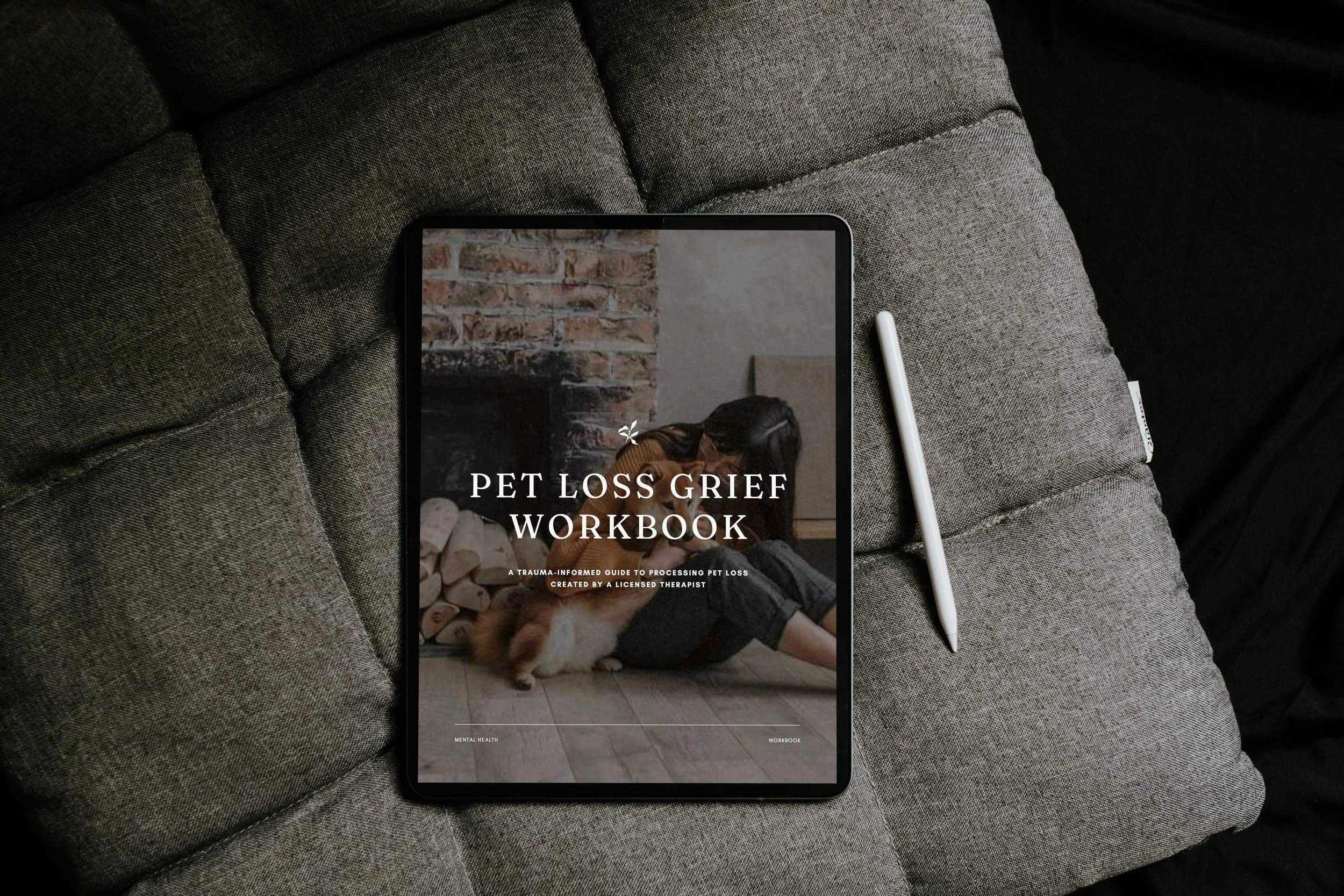
If you like having a question to start with, that’s part of why I created my Pet Loss Grief Workbook. It gives you more prompts and exercises to come back to on days when you want to spend some time with your grief and aren’t sure where to begin.
Journal Prompts For Processing Pet Loss Grief
When you miss your pet
Right now, grief feels…
I feel the saddest when…
The thing I miss most about my pet is…
Without my pet, my days feel...
One thing my pet taught me is…
Something I wish others understood about this loss is…
Right now, what I need most is…
When the loss still feels unreal
I still catch myself expecting…
The loss feels most real when…
A routine that feels different now is…
Something my mind is still struggling to accept is…
When grief feels overwhelming
What emotions have I been trying hardest to avoid or push away?
When grief feels overwhelming, what do I usually do to cope? Does it help in the long run?
If my grief could speak without being judged, what would it want me to know today?
What would it look like to make just a little more room for my feelings this week, without trying to fix them?
When you feel guilty or keep second-guessing yourself
The moment or decision I keep replaying is…
What did I know at the time? What have I learned since?
What was I trying to protect my pet from or give them when I made that decision?
What would I want a friend in the same situation to remember about how they cared for their pet?
If you keep coming back to “Did I do the right thing?” or “How did I miss that?”, I spend more time with guilt and regret in the Pet Loss Grief Workbook. You can start there and come back to the other sections whenever you feel ready.
When you’re adjusting to life without your pet
The quietest part of the day is…
A responsibility or role that changed after my pet died is…
What did our daily routine give me that I miss now?
What’s one small thing that could make the hardest part of tomorrow a little easier?
Staying Connected
What are the qualities or lessons my pet gave me that I want to carry into the future?
What are meaningful ways I can continue honoring our bond while also caring for myself?
How do I hope to remember my pet one year from now? Five years from now?
Is there a way I’d like to honor my pet that feels right for me?
The Fear of Moving Forward
What scares me the most about moving forward is...
What do I want to remember about our bond, even as my grief changes?
What feels manageable to do with my pet’s belongings right now?
If I imagined my pet wanting something for me, what might it be?
What’s one thing I’d like to do for myself this week, even while I’m missing my pet?

Can I use these prompts if my pet is still alive?
Yes. If your pet is aging or ill, you may already be grieving changes in their health or the time you thought you’d have together. This is called anticipatory grief. You can adapt a prompt to what’s happening now.
Try “One ordinary thing we still get to do together is…” or “What’s been hard about caring for my pet this week, and what kind of help would make a difference?”
Resources & Support for Pet Loss Grief
Pet Loss Grief Workbook
If you only write one sentence today, that’s okay. If you’d like to keep writing, I created my Pet Loss Grief Workbook to give you somewhere to start. It includes guided prompts and exercises for the things that can come up after a pet dies, like replaying decisions you made near the end, getting through the hours you used to spend together, and finding ways to remember your pet. You can go at your own pace and start with whatever feels most relevant today.

70-page guided workbook for navigating grief after the loss of a beloved pet.
Losing a pet can affect every part of your life—from your daily routines and sense of home to your identity, relationships, and emotional well-being.
Created by mental health therapist Chaucee Stillman, MA, LPCC, this 70-page digital workbook offers compassionate education, reflection prompts, coping tools, and meaningful exercises to help you understand and process your grief at your own pace.
Rooted in a gentle, trauma-informed approach, this workbook honors the depth of the human-animal bond without imposing a timeline or asking you to simply “move on.”
About the Workbook
I originally created this workbook for the six-week Pet Loss Grief Group I facilitate throughout the year.
Pet loss is often misunderstood or minimized, yet the death of an animal companion deserves just as much compassion, understanding, and support as any other significant loss.
This workbook combines grief education with practical exercises to help you navigate difficult emotions, process guilt and regret, explore end-of-life decisions, care for yourself through grief, and discover what moving forward might look like for you.
Because every bond is different, and moving forward doesn't have to mean leaving them behind.
What's Inside
Understanding Pet Loss Grief
Why losing a pet can hurt so deeply
Common grief responses, myths, and misconceptions
The physical, emotional, and cognitive effects of grief
Navigating the Tasks of Mourning
Acknowledging and processing your loss
Adjusting to life without your pet
Maintaining a meaningful connection while moving forward
Working Through Guilt and Regret
Self-blame, hindsight, and difficult decisions
Euthanasia and quality-of-life considerations
Caregiving responsibilities and limitations
Exercises for practicing self-compassion
Caring for Yourself Through Grief
Grounding and nervous-system regulation tools
Personalized coping strategies
Self-care and self-compassion exercises
Honoring Your Pet's Memory
Continuing bonds and remembrance rituals
Guided reflections and memory pages
Writing a letter to your pet
Learning to Live Alongside Grief
Navigating anniversaries, triggers, and difficult days
Identity and meaning after loss
Moving forward without forgetting
Exploring the possibility of welcoming another pet
Also includes guided journaling pages, printable exercises, and additional grief-support resources.
What You'll Receive
70-page digital PDF workbook
Instant access after purchase
Printable pages or the option to complete digitally
Self-paced exercises you can revisit whenever needed
This is a digital product. No physical item will be shipped.
How to Use Your Workbook
There's no right or wrong way to work through grief—or this workbook.
Move through it from beginning to end, focus on the sections that resonate most, or return to exercises as your grief changes. You can print the pages or complete them digitally using a PDF annotation app.
Some exercises may bring up difficult emotions. You're always welcome to pause, skip a section, or come back when you're ready.
Purchase & Usage Information
This workbook is intended for personal use only. Sharing, resale, redistribution, or professional use with clients, groups, or workshops requires a separate professional license.
Digital purchases are generally nonrefundable after download, except where required by law. For download assistance, contact hi@therapywithchaucee.com.
Disclaimer: This workbook is an educational and self-reflection resource, not a substitute for therapy, counseling, or medical care. Purchase does not establish a therapist-client relationship.
Created by Chaucee Stillman, MA, LPCC
Colorado License #LPCC.0025130
Free Pet Loss Guilt Worksheet
If your mind keeps going back to “I should have known” or “What if I’d done something differently?”, start here. This free worksheet gives you space to look at what you knew at the time, what you were trying to do for your pet, and what you might be leaving out when you replay the decision.
Get the free Pet Loss Guilt Worksheet here.
Pet Loss Grief & Support Group
If what you really want is somewhere to talk about your pet with people who get it, I regularly run a six-week online Pet Loss Grief & Support Group for adults across the U.S. You’re welcome to share stories about your pet, talk about the hard parts, or listen until you feel ready to speak.
Explore the Pet Loss Grief & Support Group.
More Pet Loss Grief Resources
If you’re figuring out what kind of support would feel right for you, you can browse my pet loss articles, worksheets, and other resources in one place.
Browse pet loss grief resources.