
Individual Therapy in Colorado
The ways we’ve learned to survive don’t always help us live.


Maybe you can’t name exactly what’s wrong, but you know you don’t want to keep feeling this way.
Maybe life has just been feeling hard lately. There are things you want to change but seem unable to. Patterns you keep repeating that you’ve sworn off forever.
You don’t need to have everything figured out before coming to therapy.
That’s kinda the point ; )

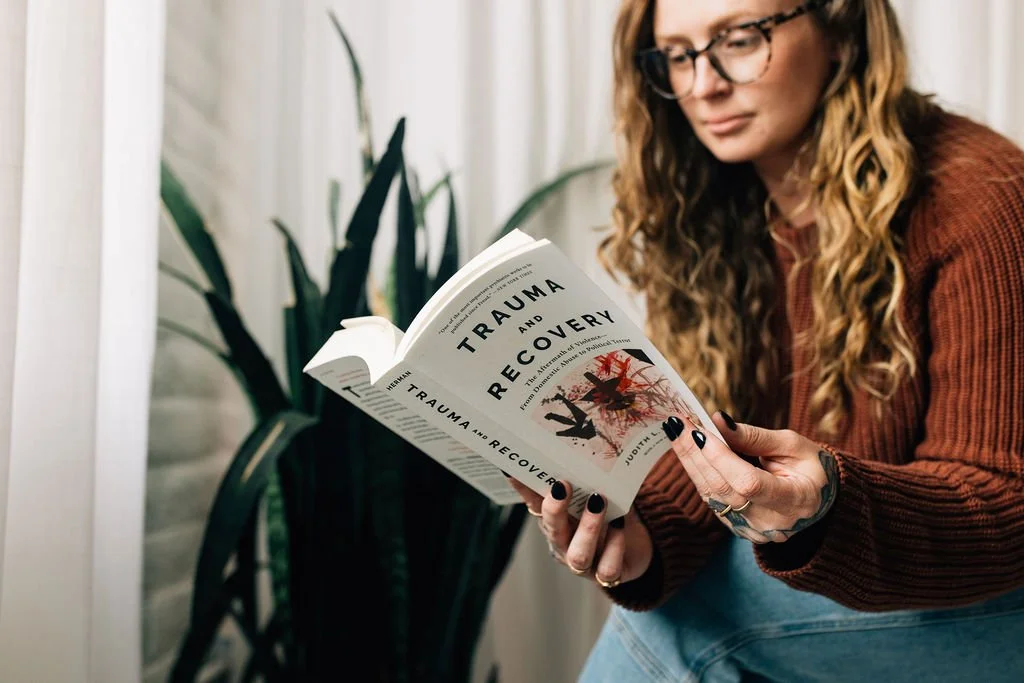
Hi, I’m Chaucee, a Trauma Therapist in Colorado.
Therapy with me is relational, collaborative, and grounded in genuine human connection with room for honesty, curiosity, and humor.
Together, we’ll look beyond the symptoms to understand the experiences, patterns, and beliefs that shaped them. From there, we’ll build practical tools, strengthen self-trust, and help you create a life that feels more grounded, meaningful, and authentically yours.


Areas I Commonly Support
People come to therapy for many different reasons. Here are some of the concerns I commonly support.
-
Complex trauma often develops from repeated experiences where safety, connection, or trust were disrupted over time. It can show up as feeling constantly on edge, emotionally shut down, disconnected from yourself, or stuck in patterns that no longer serve you. Therapy can help you better understand how these experiences continue to shape your life while creating new ways of relating to yourself, others, and the world around you.
-
Anxiety isn’t always panic attacks. Sometimes it looks like replaying conversations, expecting the worst, struggling to relax, or feeling like your mind never gets a break. Together, we’ll explore what may be driving your anxiety while building practical tools to help you feel more grounded, present, and confident in trusting yourself.
-
Depression can leave you feeling emotionally exhausted, disconnected, or like you’ve lost the version of yourself you used to know. Burnout can have a similar effect, making it difficult to find motivation or experience joy. Therapy provides space to understand what’s contributing to these feelings while helping you reconnect with what matters most to you.
-
Many men have been taught to push through, stay strong, or keep difficult emotions to themselves. Therapy offers a space to talk openly, develop healthier ways of coping, and navigate life’s challenges without judgment.
-
Relationships often reflect the ways we’ve learned to protect ourselves. Whether you struggle with people-pleasing, boundaries, conflict, trust, or feeling disconnected from others, therapy can help you understand these patterns with curiosity rather than judgment while creating healthier ways of connecting.
-
If your faith or religious upbringing left you carrying shame, fear, or confusion, therapy can provide space to process those experiences, explore your beliefs, and reconnect with your values—whatever that looks like for you.
-
Grief comes in many forms—not just after the death of someone we love. You may be grieving a relationship, a version of yourself, your health, or a life you expected to have. Therapy offers space to honor your grief, make sense of what you’re carrying, and find ways to move forward without leaving your experiences behind.
-
Recovery isn’t about perfection. Whether you’re questioning your relationship with substances, maintaining long-term recovery, or simply wanting to understand your patterns more deeply, therapy offers a space free from shame or judgment. My approach is grounded in harm reduction and recognizes that healing looks different for everyone.

“Growth means letting go of the person who has kept you safe in order to become the one who can set you free.”
Brianna WiestApproaches I Draw From
My approach is collaborative, trauma-informed, and tailored to your unique needs. Rather than following a rigid formula, I draw from evidence-based approaches that best support your goals, including:
Person-Centered & Integrative Therapy
Compassion-Focused Therapy (CFT)
Relational Trauma Therapy
Narrative Therapy
Harm Reduction & Recovery-Oriented Care
Existential & Feminist Therapy
Cognitive Behavioral Therapy (CBT)
Cognitive Processing Therapy (CPT)
What You Can Expect
Understanding patterns that have shaped your life
Learning practical tools to navigate emotions and stress
Building healthier boundaries and relationships
Processing difficult experiences at a manageable pace
Strengthening self-trust and confidence
Feeling more connected to yourself and others
LGBTQIA+ & BIPOC Affirming Care
Healing happens best when you don’t have to explain or defend who you are. As a queer therapist, I strive to create an affirming, culturally humble space where every part of your identity is welcome and respected. My goal is to understand your unique experiences while recognizing the broader systems and contexts that shape them.

My Approach to Therapy
I operate from the belief that you are the expert of your own life and experiences.
My role is not to tell you who to be or how to live your life. It’s to offer support, perspective, and practical tools while helping you better understand yourself and what matters most to you.


FAQs
-
Your first session is an opportunity for us to get to know one another. We’ll discuss what brings you to therapy, your goals, your background, and any questions you may have about the counseling process. There is no pressure to share everything at once. We move at a pace that feels comfortable and safe for you.
-
Most clients begin with weekly therapy sessions to build momentum and establish a strong therapeutic relationship. As progress is made, some clients choose to transition to biweekly sessions. We’ll determine a schedule that best supports your needs and goals.
-
That’s completely okay. Many clients come to therapy feeling nervous or unsure about what to expect. My goal is to create a welcoming environment where you feel comfortable asking questions, sharing at your own pace, and exploring what support looks like for you.
-
Getting started is simple! Reach out to schedule a consultation, and we’ll discuss what you’re looking for, answer any questions you have, and determine whether we’re a good fit for working together.
Therapy for Complex Trauma & C-PTSD
Trauma doesn’t always stay in the past.
Sometimes it shows up as anxiety, people-pleasing, emotional overwhelm, difficulty trusting others, feeling constantly on edge, or struggling to believe you’re enough.
You may know exactly what happened, or you may simply recognize that something doesn’t feel right.
Together, we’ll explore how your experiences have shaped the way you see yourself, others, and the world around you. We’ll move at a pace that feels safe and supportive while building tools to help you feel more grounded, empowered, and connected to yourself.
You may benefit from trauma therapy if you:
Feel stuck in survival mode
Struggle with emotional regulation
Experience anxiety, panic, or hypervigilance
Have difficulty trusting yourself or others
Carry shame related to past experiences
Feel disconnected from yourself or your relationships

Therapy for Depression
Depression can make even the smallest tasks feel overwhelming.
You may feel exhausted, disconnected, numb, hopeless, or like you’re simply going through the motions. Sometimes depression shows up quietly—making it harder to enjoy things you once loved or connect with the people who matter most.
Therapy provides a space to understand what’s contributing to your depression, develop healthier coping strategies, and reconnect with the parts of yourself that may feel distant right now.
You may benefit from therapy if you:
Feel emotionally numb or disconnected
Have lost interest in activities you once enjoyed
Struggle with motivation or energy
Experience feelings of hopelessness or worthlessness
Feel isolated or withdrawn from others
Want support navigating a difficult season of life

Therapy for Anxiety
Anxiety has a way of convincing us that everything is urgent.
Your mind is constantly racing. You’re overthinking conversations from three years ago at 2am. You’re preparing for worst-case scenarios that haven’t happened. Rest feels impossible because your brain refuses to shut off.
It’s exhausting.
Together, we’ll identify what’s fueling your anxiety, strengthen your coping tools, and help your nervous system find a little more breathing room.
You may benefit from therapy if you:
Constantly worry or overthink
Feel overwhelmed by everyday responsibilities
Have difficulty relaxing or slowing down
Experience panic attacks or intense anxiety
Struggle with perfectionism
Feel stuck in cycles of self-doubt

Good therapy starts with finding a therapist you feel comfortable being yourself with.
Think we might be a good fit?